Descartes
-
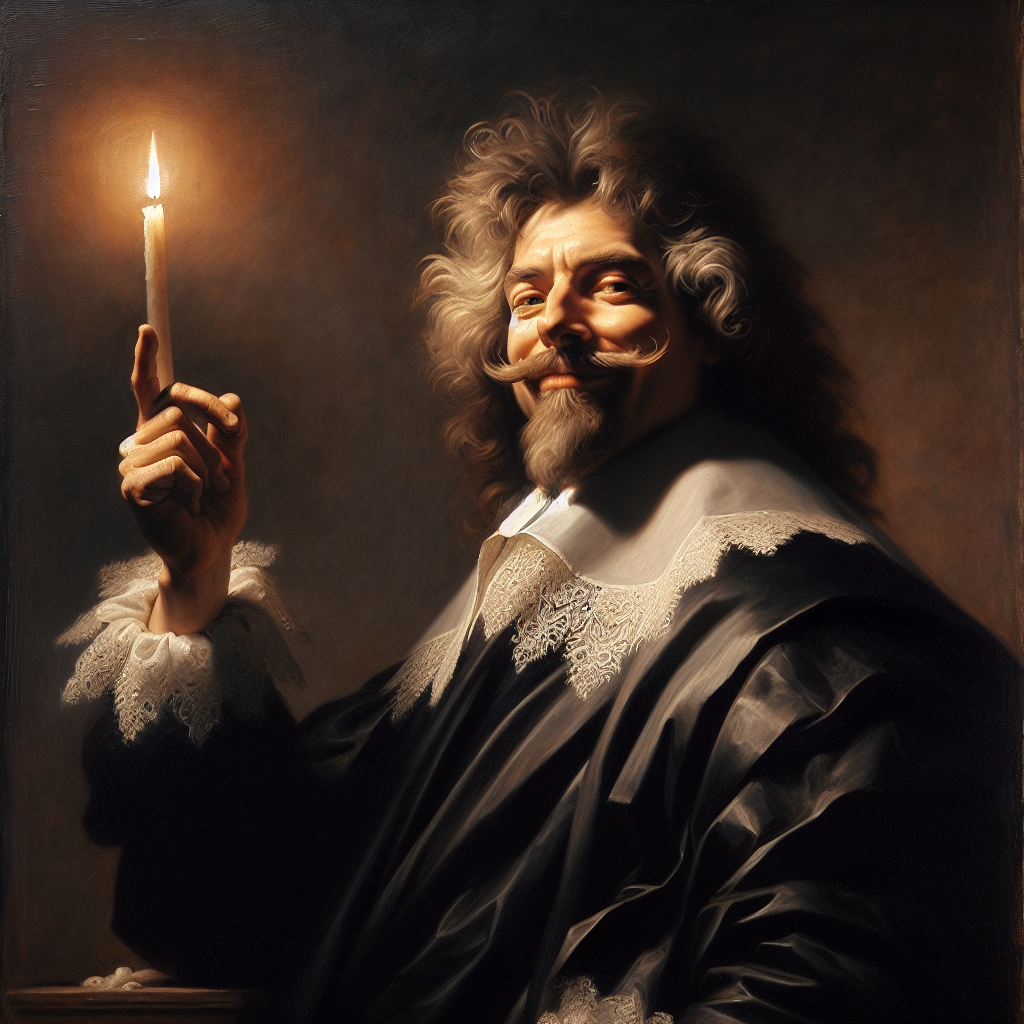
This extremely brief #EuropeanBios entry, #52, is René Descartes, a talented mathematician who fell victim to Dunning-Kruger syndrome and thought he was therefore also a great philosopher. He got so far up his own ass he thought he found god.
-
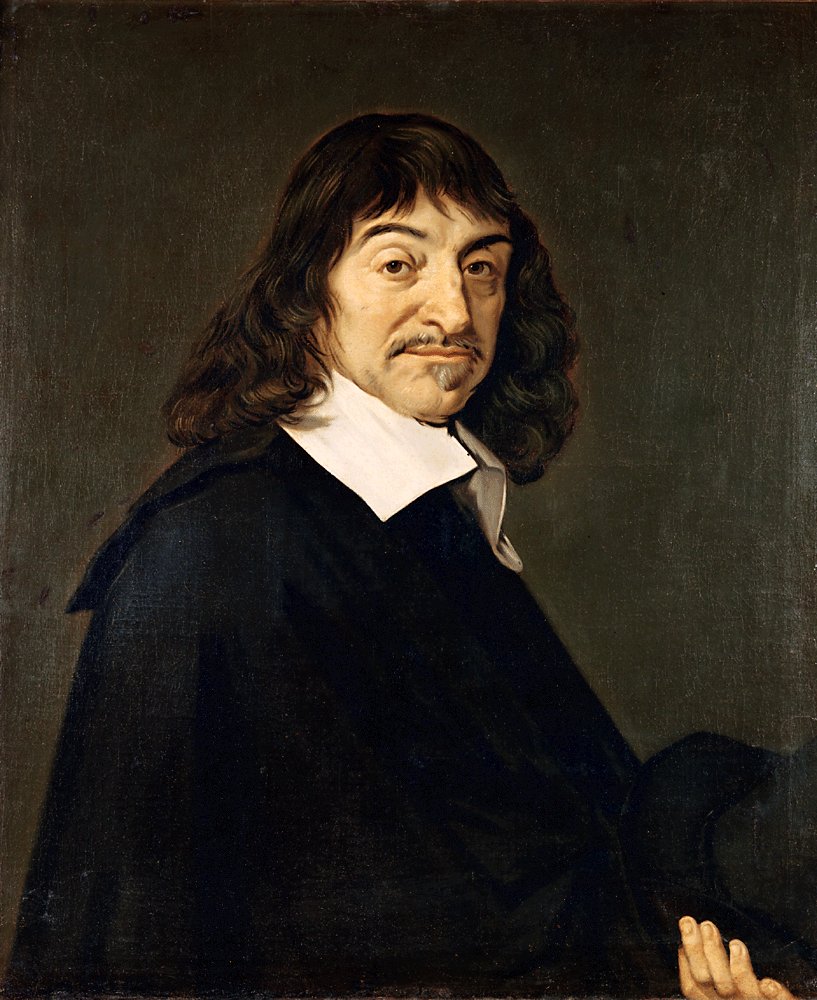
Portrait of René Descartes, Frans Hals, c.1649-1700 public domain -
The reason this thread is going to be short is because the book I read turned out not to be a proper biography, but was instead a brief bio followed by the full text of his most famous book, Meditations on First Philosophy, which was absurd claptrap.
-
Born in 1596, Descartes was taught Aristotelian theory when Galileo was still gaining his fame. He heard about Galileo's model of the universe and also what happened to Galileo for talking about it, so although he agreed he said little about it in public.
-
He made some genuine breakthroughs in mathematics. Among other things, he invented the "Cartesian system" of coordinates, which is named after him. He also invented the standard notation for representing squares, cubes etc. with a superscript number.
-
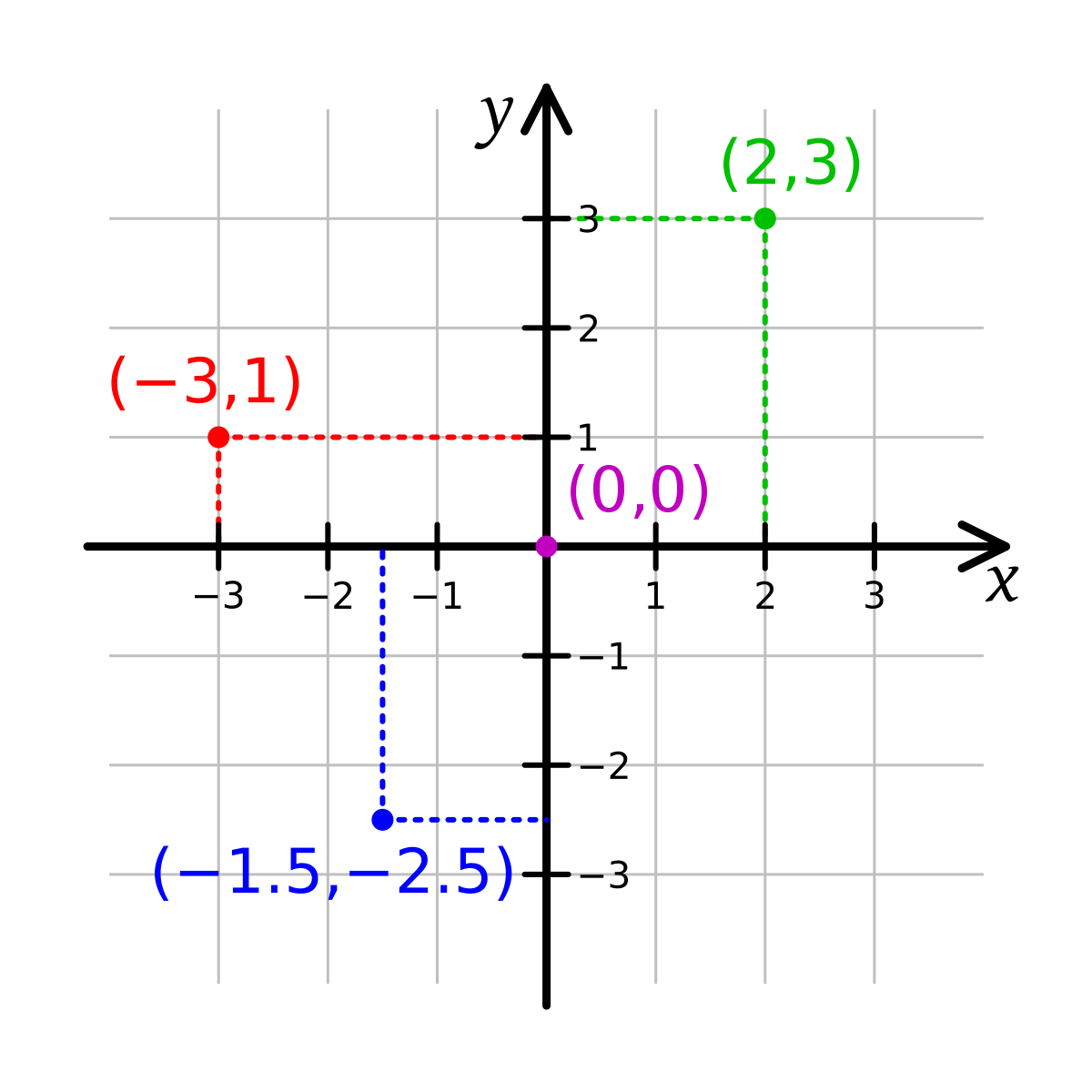
Cartesian coordinate system diagram illustrating x and y axes via Wikimedia Commons (CC BY-SA) -
He is however much more famous for his philosophy which is odd because it's extremely silly. He decided his opening position should be that one should doubt absolutely everything, and only believe things that you can observe directly to be true. So far so good.
-
Descartes was the first to write "I think, therefore I am" (in French, then later translated to Latin as "Cogito ergo sum"). This was the foundation of his thought experiments: he does not need to prove the existence of himself, because he's the one doing the thinking. Fine.
-
But he then goes totally off the rails because of an entirely arbitrary definition of what counts as "obviously" true. He writes in circles, spinning out tautological arguments and eventually concludes that because existence is a property of God, therefore God does exist.
-
He spends a great deal of time in Meditations sucking up to god in general while simultaneously trying to make the case that we should only believe things that we can prove are true from observation. It's hard not to think of Galileo in that context.
-
So my most charitable reading of Meditations is that he was trying to square the circle, allowing the church to retain its supremacy while allowing science to prove things from observation. But maybe he was just a mathematician out of his depth in philosophy.
-
Descartes' legacy is enormous. His fundamental assertion that we should only believe what we can prove has had him dubbed the "Father of Modern Philosophy" by a bunch of people who are taking him way, way too seriously, and he also did a lot of pretty good maths.
-
P.S. Whenever I come down on the side of some famous historical person being actually a bit shit I always feel like I must be missing something, but then I remember actual famous people I've met who are in reality idiots and remember that fame and accomplishment are not synonyms.
Text and images copyright © 2020-2023 Laurie Voss
except where indicated
except where indicated